CLASS; J S S 1 WEEK 6 -7
TOPIC; CONSEQUENCES OF USING FAKE AND ADULTRATED GOODS
Adulterant
An adulterant is a pejorative term for a substance found within other substances such as food, fuels or chemicals, although not allowed for legal or other reasons. It will not normally be present in any specification or declared contents of the substance, and may not be legally allowed. The addition of adulterants is called adulteration. The most common reason for adulteration is the use by manufacturers of undeclared materials that are cheaper than the correct and declared ones. The adulterants may be harmful, or reduce the potency of the product, or they may be harmless.
“Adulteration” is a legal term meaning that a food product fails to meet federal or state standards. Adulteration is an addition of another substance to a food item in order to increase the quantity of the food item in raw form or prepared form, which may result in the loss of actual quality of food item. These substances may be other available food items or non-food items. Among meat and meat products some of the items used to adulterate are water or ice, carcasses, or carcasses of animals other than the animal meant to be consumed.
Adulterated food is impure, unsafe, or unwholesome food. In the United States, the Food and Drug Administration (FDA),regulates and enforces laws on food safety as well as Food Defense after the Food Safety and Modernization Act was passed in 2011. The FDA provides some technical definitions of adulterated food in various United States laws.
In food and beverages
Past and present examples of adulteration, some dangerous, include:
- Roasted chicory roots used as an adulterant for coffee
- Diethylene glycol, used dangerously by some winemakers in sweet wines
- Apple jellies (jams), as substitutes for more expensive fruit jellies, with added colorant and sometimes even specks of wood that simulate raspberry or strawberry seeds
- Water, for diluting milk and alcoholic beverages
- Cutting agents used to adulterate (or “cut”) illicit drugs—for example, shoe polish in hashish, amphetamines in ecstasy, lactose in cocaine
- Urea, melamine and other no protein nitrogen sources, added to protein products to inflate crude protein content measurements.
- High fructose corn syrup or cane sugar, used to adulterate honey
- Water or brine injected into chicken, pork, or other meats to increase their weight.
|
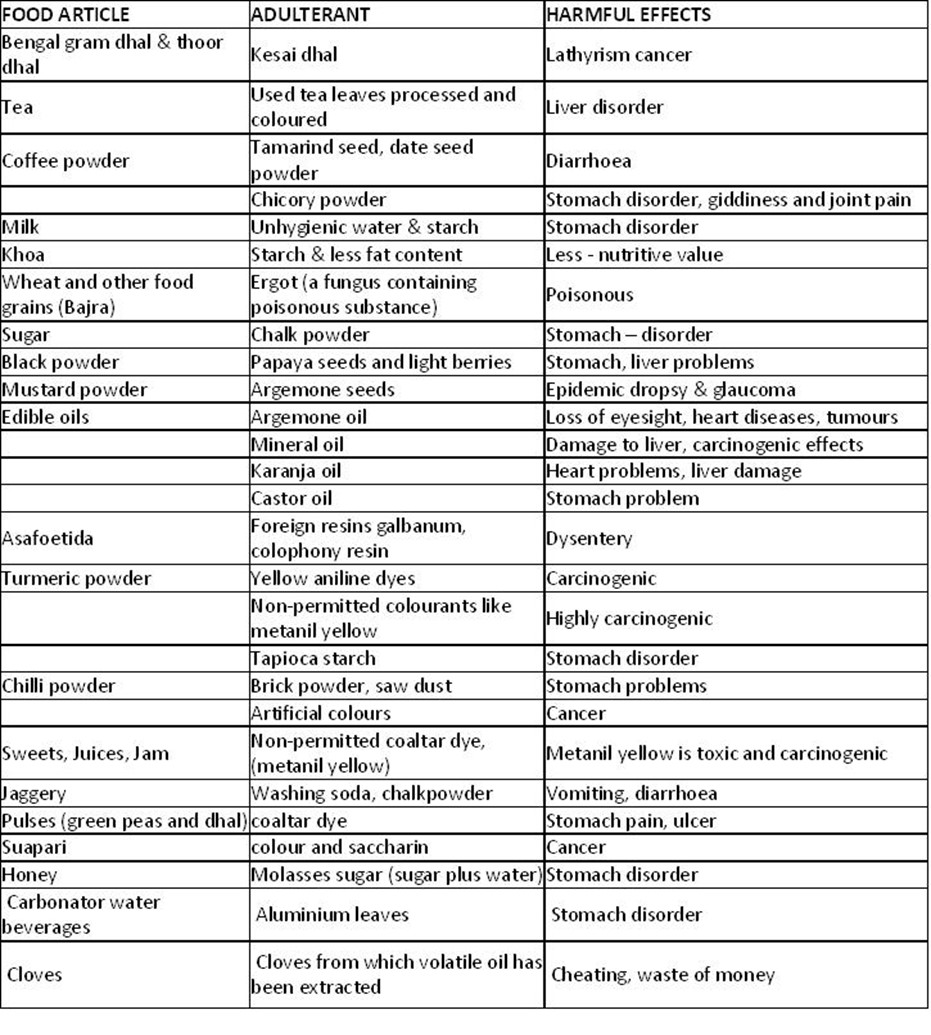 Adulteration In Food Stuff And Its Harmful EffectsPreventionThe best way to avoid these health problems is prevention. There are many steps we can take to ensure this. We can begin by taking interest in the place from where we buy our food ingredients, for example, is it from a reputed shop or retailer, we need to check out. We also need to check if these outlets are regularly checked by food inspectors and if the premises are kept clean with no infestations. We need to check if the packaging is intact, as also the expiry date and the source of the product. It is also necessary to talk regularly to the local community to check if people are falling sick after eating in a particular restaurant or food ingredients bought from a particular retailer. We should also create awareness in the local community on the ill effects of food adulteration so that when it happens the public knows when to seek help.We need to remember that contamination could happen in very small amounts over a period of time and it might be impossible to detect or too late to intervene. So it is prudent that every one of us takes special interest in this subject and educate our families, friends and colleagues about this menace. (The author is a consultant colorectal surgeon at Apollo Hospitals, Chennai. He is the lead clinician in the department of colorectal surgery and super specializes in surgical management of the diseases of the colon, rectum and anus).