CLASS; J S S 1 WEEK 8 TOPIC;
BEAD WORKS
Bead
A bead is a small, decorative object that is formed in a variety of shapes and sizes of a material such as stone, bone, shell, glass, plastic, wood or pearl and that a small hole is drilled for threading or stringing. Beads range in size from under 1 millimeter (0.039 in) to over 1 centimeter (0.39 in) in diameter. A pair of beads made from Nassarius sea snail shells, approximately 100,000 years old, are thought to be the earliest known examples of jewelry / jewelry.
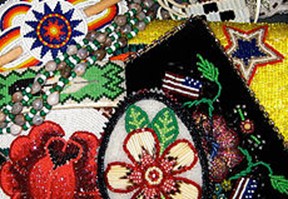
Beadwork is the art or craft of making things with beads. Beads can be woven together with specialized thread, strung onto thread or soft, flexible wire, or adhered to a surface (e.g. fabric, clay
Beadwork is the art or craft of making things with beads. Beads can be woven together with specialized thread, strung onto thread or soft, flexible wire.
Types of beads
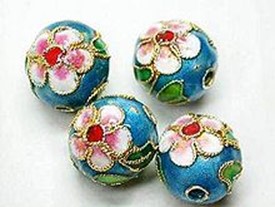
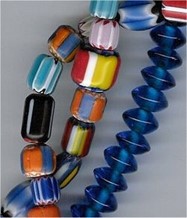
Cloisonné beads
Beads may be divided into several types of overlapping categories based on different criteria such as the materials from which they are made, the process used in their manufacturing, the place or period of origin, the patterns on their surface, or their general shape. In some cases, such as millefiori and cloisonné beads, multiple categories may overlap in an interdependent fashion.
Components
Beads can be made of many different materials. The earliest beads were made of a variety of natural materials which, after they were gathered, could be readily drilled and shaped. As humans became capable of obtaining and working with more difficult materials, those materials were added to the range of available substances. More recently, synthetic materials were added.
In modern manufacturing, the most common bead materials are wood, plastic, glass, metal, and stone.
Natural materials
Beads are still made from many naturally occurring materials, both organic (i.e., of animal- or plant-based origin) and inorganic (purely mineral origin). However, some of these materials now routinely undergo some extra processing beyond mere shaping and drilling such as color enhancement via dyes or irradiation.
The natural organics include bone, coral, horn, ivory, seeds (such as tagua nuts), animal shell, and wood. For most of human history pearls were the ultimate precious beads of natural origin because of their rarity; the modern pearl-culturing process has made them far more common. Amber and jet are also of natural organic origin although both are the result of partial fossilization.
The natural inorganics include various types of stones, ranging from gemstones to common minerals, and metals. Of the latter, only a few precious metals occur in pure forms, but other purified base metals may as well be placed in this category along with certain naturally occurring alloys such as electrum. There are also paper beads.
Synthetic materials
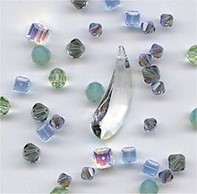
The oldest-surviving synthetic materials used for bead making have generally been ceramics: pottery and glass. Beads were also made from ancient alloys such as bronze and brass, but as those were more vulnerable to oxidation they have generally been less well-preserved at archaeological sites.
Many different subtypes of glass are now used for bead making, some of which have their own component-specific names. Lead crystal beads have a high percentage of lead oxide in the glass formula, increasing the refractive index. Most of the other named glass types have their formulations and patterns inseparable from the manufacturing process.
Small, colourful, fusible plastic beads (some brands are Nabbi, Hama, Perler, and Pyssla) can be placed on a solid plastic-backed peg array to form designs and then melted together with a clothes iron; alternatively, they can be strung into necklaces and bracelets or woven into keychains. Fusible beads come in many colors and degrees of transparency/opacity, including varieties that glow in the dark or have internal glitter; peg boards come in various shapes and several geometric patterns. Plastic toy beads, made by chopping plastic tubes into short pieces, were introduced in 1958 by Munkplast AB in Munka-Ljungby, Sweden, under the brand Nabbi. Known as Indian beads, they were originally sewn together to form ribbons.
Place or period of origin.
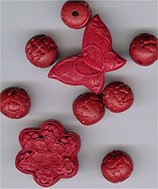
Carved Cinnabar lacquer beads
African trade beads or slave beads may be antique beads that were manufactured in Europe and used for trade during the colonial period, such as chevron beads; or they may have been made in West Africa by and for Africans, such as Mauritanian Kiffa beads, Ghanaian and Nigerian powder glass beads, or African-made brass beads.
Austrian crystal is a generic term for cut lead-crystal beads, based on the location and prestige of the Swarovski firm.
Czech glass beads are made in the Czech Republic, in particular an area called Jablonec and Nisou. Production of glass beads in the area dates back to the 14th century, though production was depressed under communist rule. Because of this long tradition, their workmanship and quality has an excellent reputation.
Vintage beads, in the collectibles and antique market, refers to items that are at least 25 or more years old. Vintage beads are available in materials that include lucite, plastic, crystal, metal and glass.


Components
Beads can be made of many different materials. The earliest beads were made of a variety of natural materials which, after they were gathered, could be readily drilled and shaped. As humans became capable of obtaining and working with more difficult materials, those materials were added to the range of available substances. More recently, synthetic materials were added.
In modern manufacturing, the most common bead materials are wood, plastic, glass, metal, and stone.
Symbolic meaning of bead.
In many parts of the world, beads are used for symbolic purposes, for example:
- use for prayer or devotion – e.g. rosary beads for Roman Catholics, misbaha for Muslims
- use for anti-tension devices, e.g. worry beads
- use as currency e.g. Aggrey beads from Ghana
- use for gaming e.g. owari beads for Makala
- Greek komboloi beads as in Crete.
History of Beads.
Beads are known to be one of earliest forms of trade between the human race. It is thought that is because of bead trading that humans developed language. Beads are said to have been used and traded for most of our history. The oldest beads found to date were at Ksar Akil, in Lebanon. Prior to this find, the beads found in the Blombos Cave were the oldest at about 72,000 years old.
Surface patterns.
After shaping, glass and crystal beads can have their surface appearance enhanced by etching a translucent frosted layer, applying an additional colour layer, or both. Aurora Borealis, or AB, is a surface coating that diffuses light into a rainbow. Other surface coatings are vitrail, moonlight, Dorado, satin, star shine, and heliotrope.
Faux beads are beads that are made to look like a more expensive original material, especially in the case of fake pearls and simulated rocks, minerals and gemstones. Precious metals and ivory are also imitated.
Tagua nuts from South America are used as an ivory substitute since the natural ivory trade has been restricted worldwide.