WEEK EIGHT
TOPIC: PLANT NUTRIENTS AND NUTRIENT CYCLES
CONTENT
- Classify plant nutrients
- Functions and deficiency symptoms of nutrients
- Nutrient cycles
PLANT NUTRIENTS AND NUTRIENT CYCLES
Plant nutrients are classified into two, these includes macronutrient and micronutrient.
MACRONUTRIENTS
These are mineral elements or nutrients required by crops in large quantities. Examples are: nitrogen, phosphorus, potassium, magnesium, calcium and sulphur.
MICRONUTRIENT OR TRACE ELEMENTS
These are mineral elements or nutrients required by crops in small quantities. Examples are: Zinc, Copper, boron, molybdenum, Iron, Chlorine and Manganese.
FUNCTIONS AND DEFICIENCY SYMPTOMS OF PLANT NUTRIENTS
| S/N | ELEMENT | FUNCTION | DEFICIENCY SYMPTOMS |
| 1. | Nitrogen |
|
|
| 2. | Phosphorus |
|
|
| 3 | Potassium |
|
|
| 4 | Calcium |
|
|
| 5 | Magnesium |
|
|
EVALUTION
- Give five examples each of macro and micro nutrients.
- State the functions and deficiency symptoms of sulphur, iron, manganese copper, zinc, boron and molybdenum.
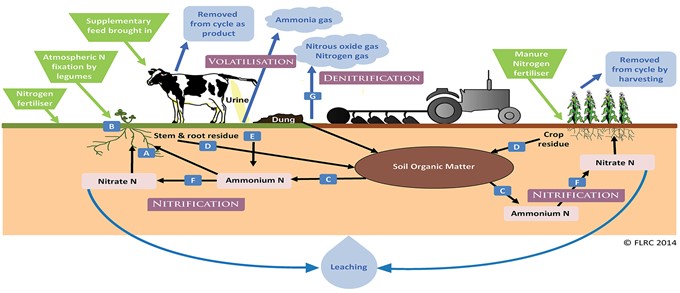
NITROGEN CYCLES
Nitrogen cycles refer to the circulation of certain nutrients like nitrogen, carbon and water in nature.
Nitrogen cycle is the nature’s way of regulating the amount of Nitrogen in the soil and air
Ways by which Nitrogen is added to the soil in Nitrogen Cycle
- Direct fixation by lightening during rainfall.
- Incorporation into the soil by free living bacteria or non-symbolic bacteria.
- Nitrogen fixing bacteria in the root nodules.
- Decomposition of organic matter.
- Application of Nitrogen fertilizer.
- Ammonification.
- Nitrification.
Soil can gain Nitrogen through the following ways
- Symbiotic Nitrogen Fixation
- Electrical discharge
- Non symbiotic Nitrogen Fixation
- Ammonification and Nitrification
- Application or organic manure and Nitrogen fertilizers
Ways by which nitrogen is lost from the soil are:
- By Denitrification
- Soil erosion
- Leaching
- Soil PH
- Bush burning
- Crop removal
- Volatilisation
- Oxidation reaction
- Reduction reaction
Processes that lead to formation of Nitrate from organic matter in Nitrogen Cycle
- Putrefaction: Delay of plant and animal remains into similar nitrogenous compounds by microorganism
- Amminization: Products from putrefaction reactions converted to simple amino compounds and animal
- Ammonization: Conversion of amino compounds and amines into ammonium compounds
- Nitrification: Oxidation of ammonium compounds into nitrites and Nitrates

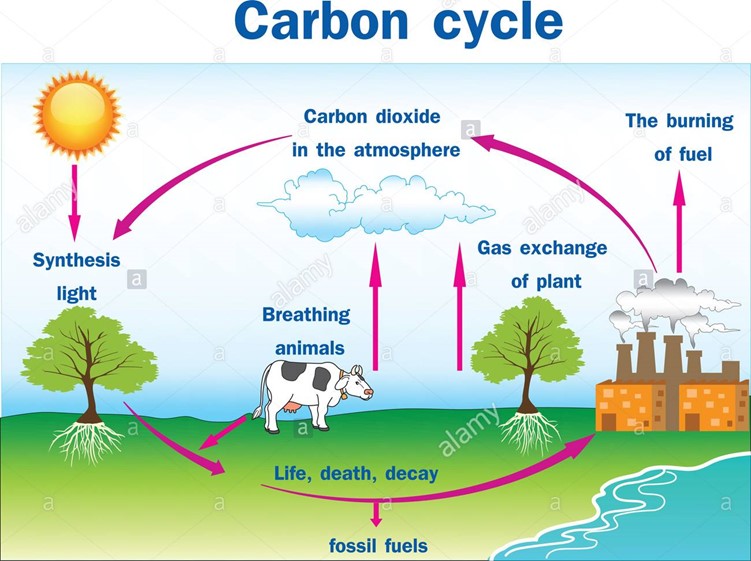
CARBON CYCLE
This involves the series of processes which contribute to the circulation of carbon in nature.Explanation
- Carbondioxide is removed from the air mainly by photosynthesis
- Carbon is lost in form of carbonates of calcium and magnesium through leaching and drainage.
The atmosphere gains carbondioxide through
- Burning of fuel like coal and wood
- The action of volcanoes which releases carbon dioxide
- The respiration of plants and animals
- Death and delay and putrefaction of plants and animals
- Diffusion of carbon dioxide from seas and other bodies of water
IMPORTANCE OF CARBON CYCLE
- Plant use carbondioxide obtained from the air to manufacture their food during photosynthesis
- Provision of carbon which is the essential building block of all organic matters
- Organic matter which is made from carbon helps to replenish soil nutrients.

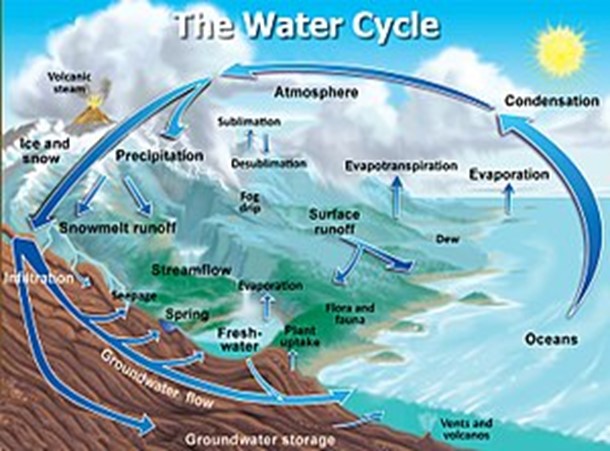
WATER CYCLE
This is the continuous movement of water from the atmosphere to the earth and from the earth to the atmosphere.The atmosphere receives water through
- Evaporation from oceans and land
- Transpiration from plants
- Breathing and respiration by plants and animals
Land receives water through:
- Rainfall and precipitation
- Infiltration and percolation
FORMS IN WHICH WATER EXISTS IN THE SOIL
- Hygroscopic water
- Capillary water
- Gravitational water
Ways of conserving water in the soil
- Stoppage or reduction of water-run-off
- Addition of humus or organic mature
- Removal of weeds to reduce transpiration and water loss
- Mulching
- Cover cropping
- Contour ridging
- Appropriate tillage
- Strip cropping
EVALUATION
- Explain Nitrification.
- List five ways the soil can gain nitrogen.
IMPORTANCE OF WATER TO CROPS
- Water provides the medium for absorption of minerals salts
- It facilitates transfer of nutrients to other parts of plants
- It is an essential raw material during photosynthesis
- Facilities enzymatic activities occurring in crop plant protoplasm
- It is a constituent of protoplasm
- It has cooling effect on crops
- It helps to sustain life
- It helps in seed germination
- It helps to maintain plant turgor or turgidity

GENERAL EVALUATION
- List five importance of water to crops.
- List three form which water exist in the soil.
- List three ways by which Nitrogen is lost from the soil.
- What is macro nutrient? List five examples.
- What are micronutrients? List five examples.
READING ASIGNMENT
Essential Agricultural Science for Senior Secondary Schools by O.A. Iwena, Chapter 18, pages 187 – 201WEEKEND ASSIGNMENT
- The conversion of nitrates to nitrogen gas by certain bacteria is ___ (a) oxidation (b) reduction (c) nitrification (d) de-nitrification
- Microbial delay of plant and animal remains into simpler nitrogenous compound is ___ (a) nitrification (b) putrefaction (c) leaching (d) burning
- The washing away of soil nutrient down beyond the reach of the root is called ___ (a) erosion (b) mulching (c) leading (d) fertilization
- The following are macro nutrients expect (a) boron (b) nitrogen (c) magnesium (d) calcium
- Which of these is not a micro-element? (a) copper (b) zinc (c) boron (d) potassium
SECTION B
- (a) Differentiate between macro and micro nutrients
(b) List three factors influencing nutrient availability in the soil
2. (a) State three function of Nitrogen to plants
(b) State three importance of organic matter in Agricultural