WEEK SIX
TOOLS OF ECONOMIC ANALYSIS
CONTENT
- Tables or schedules
- Graphs
- Bar chart (simple, component and multiple)
- Pie Chart
- Merits and demerits
TABLES OR SCHEDULES
A table is a systematic and orderly arrangement of information, facts or data, using rows and columns for presentation which make it easier for better understanding of the relationship between variables. It serves as the most commonly used tool in Economics for economic analysis.
FEATURES OF A TABLE
- It must give an orderly arrangement of data.
- It must have a title or heading.
- It must be numbered if many.
- It must be very simple and easy to understand.
- The units of measurement used in the table must be stated.
USES OR IMPORTANCE OF A TABLE
- It reveals information at a glance.
- It avoids repetition.
- It makes data easy to understand.
- It allows for easy interpretation of data.
- It eases comparison between classes of data.
EXAMPLES OF A TABLE
The table below gives the performance of four students in an entrance examination.
| Students | Eng | Maths | Econs | Total |
| A | 60 | 80 | 50 | 190 |
| B | 80 | 40 | 70 | 190 |
| C | 60 | 60 | 80 | 200 |
| D | 40 | 50 | 60 | 150 |
| Total | 240 | 230 | 260 | 730 |
EVALUATION
- Define Table.
- State 3 importance of a table.
USE OF A GRAPH
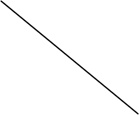
A graph is a diagram showing a functional relationship between two variables. Information presented on table can be translated into a graph for better understanding. Many types of graphs are used for economic analysis depending on the nature of the data and purpose for which they are intended
EXAMPLE OF A GRAPH
y Demand Curve
 Price (N)
 D
D

 7
7

 5
5


 3
3
 D x
D x
O 5 10 15
Quantity
FEATURES OF A GRAPH
- It must be titled.
- It must possess appropriate scales.
- The y and x axis must carry different variables.
- It must show the source of data presented.
- The y-axis must be on the vertical side and x-axis on the horizontal side.
- It must be well labeled for better understanding.
IMPORTANCE OF A GRAPH
- It shows relationship between two variables.
- It makes quantitative information illustrated in tabular form clearer and quicker impression.
- It helps to interpret values of variables.
- The values or quantities in the table are better understood and appreciated in graph.
- It provides basis for comparing variables provided in the table.
EVALUATION
- What is a graph?
- State five features of a graph
USE OF A CHART
A Chart is a device being used to provide us with the interpretation or presentation of data in the form of diagram or picture. In economics, many types of chart are used for economic analysis among which are bar charts and pie chart.
BAR CHART
A bar chart is a way of representing tabulated data with evenly spaced bars with equal gap. Bar charts can be of three types
- SIMPLE BAR CHARTS: Used for data with one variable
- COMPONENT BAR CHARTS: Used for data with two variables
- MULTIPLE BAR CHARTS: Used for data with more than two
Example of simple Bar Charts
| Score | 2 | 4 | 6 | 8 | 10 |
| Frequency | 7 | 8 | 9 | 4 | 2 |
Frequency









 x
x
2 4 6 8 10
Scores
Example of Component Bar Charts
| Class | Boys | Girls | Total |
| S. S. 1p | 24 | 18 | 42 |
| S. S. 1w | 17 | 22 | 89 |
| Total | 41 | 40 | 81 |





Examples of Multiple Bar Charts
| Produce line Tunner | 2000 | 200 | 2002 |
| Cocoa | 500 | 700 | 200 |
| Cotton | 400 | 300 | 500 |
| Groundnut | 300 | 400 | 400 |










EVALUATION
- Define the meaning of a chart
Highlight three types of chart
PIE CHARTS
This is a circle divided into sections expressed in degrees with each section proportionate to the frequency or attribute. The circle represents the total data and with the use of a compass and protractor it is drawn
Example: In a school the numbers of periods for the subjects are given in a table. Represent the information in a pie chart.
| English | 9 periods |
| Mathematics | 6 Periods |
| Science | 5 Periods |
| Others | 20 Periods |
Solution
| Subjects | Periods | Working | Degree |
| English | 9 | 9/40 x 3600 | 810 |
| Mathematics | 6 | 6/40 x 3600 | 540 |
| Science | 5 | 5/40 x 3600 | 450 |
| Others | 20 | 20/40 x 3600 | 1800 |
| 40 | 3600 |
LINEAR GRAPH
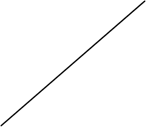
A linear graph is used in comparing between two variables priving a straight-line graph.
Examples
Given that Q = 42 – 2p find the value of Q when p = N1, N3, N5, N7 and N9, where P = Price and Q = Quantities. Represent the information on a line graph
Solution
Q = 42 – 21
When
P = N1, Q = 42 – 2 x N1 – 42 – N2 = N40
P = N3, Q = 42 – 2 x N3 = 42 – N6 = N36
P = N5, Q = 42 – 2 x N5 = 42 – N10 = N32
P = N7, Q = 42 x 2 x N7 = 42 – N14 = N28
P = N9, Q = 42 – 2x N9 = 42 – N18 = N24
 Price (N) Quantity (Units)
1 40
3 56
5 32
7 28
9 24
Example of a linear graph
y
 Price (N)
9- x
7- x
5- x
3- x
 x
x
O 36 32 28 24
Quantity
EVALUATION
- Write short note on pie chart.
- Explain linear graph in 2 paragraph.
READING ASSIGNMENT
Amplified and Simplified Economics for SSS by Femi Longe page 19-23
GENERAL EVALUATION QUESTIONS
- Define frequency distribution.
- Giving the budget estimate of a state for 2010. Use the information to present a bar chart
Item Amount
Agric 70
Sports 80
Education 110
Health 60
Development 30
Finance 50 - Define a pie chart.
- Different between a bar chart and a linear graph.
- The production of carrot and onion by a farmer in Jos for the years 2002-2005.You are required to represent this data using component bar chart:
Year Carrot Onion Total
2001 40 30 70
2002 30 20 50
2003 30 40 70
2004 20 40 60
WEEKEND ASSIGNMENT
- Data presented in tables are usually arranged as (a) Charts and tables (b) Rows and columns (c) Graphs and rows (d) Pie chart


 The diagram is a (a) Bar Chart (b) Pie chart (c) Histogram (d) Ball Chart


 The diagram is a (a) Bar Chart (b) Pie chart (c) Histogram (d) Ball Chart

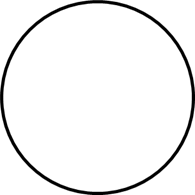 The Total number of fruits consumed by a family in a year was 720 represented by the pie chart below. Use it to answer questions 2 – 4

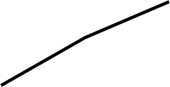


 0range 80
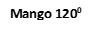
- The quantity of bananas consumed by the family (a) 60 (b) 120 (c) 200 (d) 240
- 4. The sum total of mangoes and oranges consumed by the family was (a) 200 (b) 360 (c) 400 (d) 520
- The quantity of carrots consumed by the family was (a) 200 (b) 360 (c) 400 (d) 520
- Which of the following tools of economics analysis is used when data contains more than one variable. (a) Graph (b) Symbolical statement (c) Bar chart (d) component bar chart
SECTION B
1. (a). Define i. graph ii. Chart iii. table
(b). List four importance of a table?
2. (a). The daily sales of a department store for one week are as follows:
| Days | Mon | Tue | Wed | Thur | Fri | Sat |
| Sales(N) | 1970 | 1000 | 3500 | 2250 | 1000 | 2500 |
Present the above data in a bar charts (use a graph)
(b). Mrs. Lumi purchased food stuffs as follows:
Meat N60
Green rice N40
Beans N50
Yam N70
Plantain N70
Present the above information on pie chart