week 3; materials and uses
wood; For small forests, see Woodland. For wood as a commodity, see timber. For other uses, see Wood (disambiguation).
“Wooden” and “Heartwood” redirect here. For other uses, see Wooden (disambiguation) and Heartwood (disambiguation).
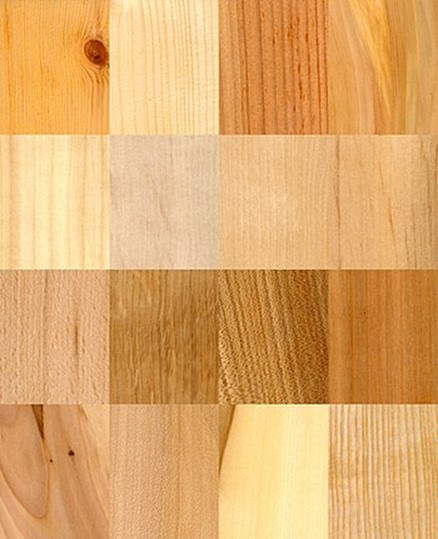 Pine Spruce Larch Juniper Aspen Hornbeam Birch Alder Beech Oak Elm Cherry Pear Maple Linden Ash |
Wood is a porous and fibrous structural tissue found in the stems and roots of trees and other woody plants. It is an organic material, a natural composite of cellulose fibers that are strong in tension and embedded in a matrix of lignin that resists compression. Wood is sometimes defined as only the secondary xylem in the stems of trees,[1] or it is defined more broadly to include the same type of tissue elsewhere such as in the roots of trees or shrubs.[citation needed] In a living tree it performs a support function, enabling woody plants to grow large or to stand up by themselves. It also conveys water and nutrients between the leaves, other growing tissues, and the roots. Wood may also refer to other plant materials with comparable properties, and to material engineered from wood, or wood chips or fiber.
Wood has been used for thousands of years for fuel, as a construction material, for making tools and weapons, furniture and paper, and as a feedstock for the production of purified cellulose and its derivatives, such as cellophane and cellulose acetate.
In 2005, the growing stock of forests worldwide was about 434 billion cubic meters, 47% of which was commercial.[2] As an abundant, carbon-neutral renewable resource, woody materials have been of intense interest as a source of renewable energy. In 1991 approximately 3.5 billion cubic meters of wood were harvested. Dominant uses were for furniture and building construction.[3]
Contents
[hide]
- 1History
- 2Physical properties
- 2.1Growth rings
- 2.2Knots
- 2.3Heartwood and sapwood
- 2.4Color
- 2.5Water content
- 2.6Structure
- 2.7Earlywood and latewood
- 2.7.1In softwood
- 2.7.2In ring-porous woods
- 2.7.3In diffuse-porous woods
- 2.8Monocot wood
- 2.9Specific gravity
- 2.10Wood density
- 3Hard and soft woods
- 4Chemistry of wood
- 4.1Extractives
- 5Uses
- 5.1Fuel
- 5.2Construction
- 5.2.1Wood flooring
- 5.2.2Engineered wood
- 5.3Furniture and utensils
- 5.4Next generation wood products
- 5.5In the arts
- 5.6Sports and recreational equipment
uses of metals
Uses of metals
We use different metals for different jobs as they have different properties: it’s important to choose the right metal for the job.
Choosing the right metal for the job
Metal Properties Uses aluminium

low density, does not corrode suitable for the bodies of planes copper

good conductor of electricity, does not react with water electrical wires as it is a good conductor
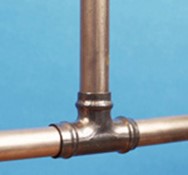
water pipes due to its low reactivitygold

very good conductor of electricity, unreactive electrical connections on circuit boards – due to its conductivity
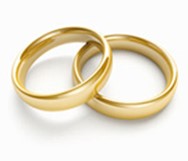
jewellery – due to its lack of reactivitysteel

cheap and strong suitable for building material When you answer questions on properties of metals it’s important to make sure that the property you give is relevant to the use you’ve been asked about: eg, copper is unreactive with water but that is not relevant if the question asks you about its use in electrical wires.
question- list 5 uses of wood
- list 5 uses of metals