WEEK TWO
TOPIC: RULES OF DIFFERENTIATION
Derivative of Sum
Let f, U and V be functions of x such that
f(x) = U(x) + V(x)
f(x +  x) = U(x +
  x) + V(x +
  x)
x)
Therefore f (x +  x) – f (x) = {U(x +
  x) + V(x +
  x) – U (x) – V(x)}
= U (x) +  x) – U(x) + V(x +
  x) – V(x)


 Therefore f (x +
  x) – f (x) = U(x +
  x) – U(x) + V(x +
  x) – V(x)
 x
x  x
x  x
x


 Lim f (x + ∆x) – f (x) = Lim U(x + ∆x) – U(x) + LimV(x + ∆x) – V(x)
∆x  x
x  x
x
Therefore f‘ (x) = U‘ (x) + V‘(x)
In other words, if y = U + V, where U and V are functions of x, then:
= +
Hence, the derivation of a sum is the sum of the derivatives.
Examples
Find the derivative of each of the following
- 2x3 – 5x2 + 2
- 3x2 +
- x3 + 2x2 + 1
 x
x - + – 3
Solution
- Let y = 2x3 – 5x2 + 2
= 6x2 – 10x
- Let y = 3x2 +
= 3x2 +
= 6x – - let y = x3 + 2x2 + 1
 x= x2 + 2x +
= 2x + 2 – - y = + 1 – 3
= x + x -3
 x
x x= x2 + 2x +
 = x – x
= 1 – 1
Functions of a Function
Suppose we know that y is a function of u and the u itself is also a functions of x, how do we find the derivation of y with respect to x?
In other words, given y = f (u) and u = h(x)
What is ? By simple re – arrangement we can write
= x ;  u
u  0,
0,  x
x  0
0
Lim = Lim x }
= lim x lim

 As
As  x 0,
x 0,  u 0
u 0
So we can

 as lim
Thus

 = x
= x
x
This is called the chain rule for differentiation.
Examples
Find the derivative of each of the following:
- y = (3x2 – 2)3
- y =
- y = )
 y = )3
 2)3
2)3
 y = )3
 2)3
2)3 solution
- Given y = (3x2 – 2)3
Let u = 3x2– 2
then y = u3
= 6x
=
= 3u2 x 6x
= 18xu2
= 18x (3x2 – 2)2
- y =
Let u = 1-2x3
then y = u
 = u – ½
 =
=
= – 6x2

 = x
= x

 =
=
 = )
= ) 
 y = 3
y = 3 Let u = 6 – x2
 then y =
= 5u-3
 = – 15u-4
= – 2x
= x
= -15u-4 x -2x
=30 x u-4
= (6-x2)4
- y = )
Let u = 1 + x2
then y = = 1
 = u
= u
= – u
1
= –
= 2x= x
-1
= x 2x
 -x
-x
=EVALUATION
Find the derivative of the followings:
(i) y = 8x5 + 6x – 7
(ii) y = ( 4x3 – 3)4
(iii) y = 3x2 + 1/x3 + 2/x
The Derivation of a Product
We shall now consider the derivative of y = uv where u and v are functions of x.
Let y = uv
Then y + y = (u + u) (v + v)
= uv + uv + vu + uv – uv
= uv u + u v
= u + v+u
= u + v
Examples
Find the derivative of each of the following- y = (3 + 2x) (1 – x)
- y = (1 – 2x + 3x2) (4 – 5x2)
- y = (1 + 2x)2
- y = x3 (3 – 2x + 4x2)
Solution
- y = (3 + 2x) (1 – x)
Let u = 3 + 2x; v = 1 – x
= u + v
= (3 + 2x) x – 1 + (1 – x) x 2
= -(3 + 2x) + 2(1 – x)
= -3 -2x + 2 – 2x
= – 1 – 4x - y = (1 – 2x + 3x2)(4 – 5x2)
Let u + 1 – 2x + 3×2; v =4 – 5 x2
= -2 + 6x; = -10x
= u + v
= (1 -2x + 3x2) x (-10x)
+ (4 – 5x2) - y = (1 + 2x)2
 Let u = ; v = (1 + 2x)2
 = ; = 4(1 + 2x)
= u + v
= 4(1 + 2x) + (1 + 2x)2 x 1
4 (1 + 2x) + (1 + 2x)2

- y = x3 (3 – 2x + 4x2)
Let u = x3; v = (3 – 2x + 4x2)
= 3x2; = ( – 2 + 8x) x (3 – 2x + 4x2)
= 3x2; =
= u + v = x3 (4x – 1)
 y = 3
y = 3 Let u = 6 – x2
 then y =
  = – 15u-4


 = u
= u  -x
-x y = (u +
  u) (v +
  v)
v) v + v
v + v u +
u +  u
u v – uv
 v u +
v u +  u
u  v
v u
u Let u = ; v = (1 + 2x)2
 = ; = 4(1 + 2x)
 = x3 (4x – 1)
 (3x – 2x + 4x2) ½ + 3x2
x (3 – 2x + 4x2) ½
 = x3 (4x -1) + 3x2 (3 -=2x + 4x2 )
(3x – 2x + 4x2 ) ½
The Derivative of a Quotient
Let y = , where u and v are functions of x and v  0.
0.
y +  y =
y =
 y = = v – u
Examples
Find the derivative of each of the following:
- 3 + 2x – x2

 2 + x
2 + xx2 + 2x + 7
Solution
 y = 1 + x2
1 – x2
Let u = 1 + x2; v = 1 – x2
= 2x; = – 2x
= v- u
= (1 – x2) x (2x) – (1 + x2) x (- 2x)
 (1 – x2)2
= 2x – 2x3 + 2x + 2x3
(1 – x2)
= 4x
 (1 – x2)2
- y = 3 + 2x – x2

Let u = 3 + 2x – x2; = (1 – x)
= 2 – 2x; = (1 + x)
= (1 + x) x 2 (1 – x) – (3 + 2x – x2) x

= 4(1 + x)(1 – x) – (3 + 2x – x2)
 2(1 + x)(1 + x)
 = 4 – 4x2 – 3 – 2x + x2
2(1 + x)
= 1 – 2x – 3x2
2(1 + x)  y = 2 + x
x2 + 2x + 7
Put u = 2 + x; v = x2 + 2x + 7
= 1; = 2x + 2
 = (x2 + 2x + 7) x 1 – (2 + x)(2x + 2)
(x2 + 2x + 7)2
= x2 + 2x + 7 – 2(x + 2)(x + 1)
 (x2 + 2x + 7)2
= x2 + 2x + 7 – 2x2 – 6x – 4
 (x2 + 2x + 7)2
= x2 + 2x + 7 – 2x2 – 6x – 4
 (x2 + 2x + 7)2
 = – x2 – 4x + 3
(x2 + 2x + 7)2

 2 + x
2 + x y = 1 + x2
 (1 – x2)2
 (1 – x2)2

 2(1 + x)(1 + x)
 = 4 – 4x2 – 3 – 2x + x2
 y = 2 + x
 = (x2 + 2x + 7) x 1 – (2 + x)(2x + 2)
 (x2 + 2x + 7)2
 (x2 + 2x + 7)2
 (x2 + 2x + 7)2
 = – x2 – 4x + 3
 HIGHER DERIVATIVES OF THE SECOND AND THIRD ORDER . DIFFERENTIATION OF IMPLICIT FUNCTIONS
HIGHER DERIVATIVES
Given that y = f(x), is also a function of x.
The derivative of with respect to x is
. is called the second derivative of y with respect to x, and it is usually denoted
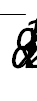
(read. Dee two y dee x squared).
 Since is also a function of x, successive derivatives can be found.
The third derivative of y with respect to x
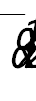

 Is and is written for short as d3y
dx3
S I d4y is the fourth derivative of y with respect to x.
dx4
in general is the nth derivative of y with respect to x.
We recall that if y = f(x), is sometimes denoted f1 (x).
Similarly , , , are sometimes
Denoted fn(x), fm(x), fiv (x) respectively.
Example 22
Find the first second and third derivatives of each of the following:
- 3×4 (b) 3x5
 2x4 + x2
 1
1
 2x4 + x2
 1
1(c) Inx (d) ex4
(e) sin3x2
Solution:
(a)Let y = 3x4
Then = 12x3
d2y = 36x2
dx2
d3y = 72x
dx3
- Let y = 3x5 – 2x4 + x2 -1
= 15x4 – 8x3 + 2x
d2y = 60x3 – 24x2 + 2
dx2
d3y= 180x2 – 48x
dx3
- Let y = Ink
=
d2y =
dx2
d3y = 2
dx3x3
- Lat y = ex4
= 4x3 ex4
d2y = 12x2ex4 + 4x3 ex4 4x3
dx2
= 12x2ex4+ 16x6 – ex4
d3y= 24 ex4 + 12x2 (ex4) +96x5 ex
dx3
ex4 + 16x6 (ex4)
= 24 ex4 + 48x5 ex4 + 96x5 ex4 + 64x9 ex4
- Let y = sin3x2
= cos3x2 (3x2)
= 6xcos3x2
d2y = 6cos 3x2 – 6x sin 3x2 (3x2)
dx2
= 6cos 3x2 – 36x2 sin3x2
d3y = -6sin3x2 (3x2) – 72x
dx3
 sin3x2 36x2cos3x2 (3x2)
= -(6sin3x2) 6x – 17xsin3x2– (36x2 cosx2)  6x
6x
= -36xsin3x2 -72xsin3x2– 216x3cos3x2
= -108xsin3x2– 216x3 cos3x2
= -108x (sin3x2 + 2x2cos3x2)
EVALUATION
Find the second and third derivatives of (1) cos 6x ( 2) 4x5 -5x
Implicit Differentiation
So far, we have treated relations. Of the form y = f (x). Examples of such relations are y = 3x2 – 2x + 1, y = 1 +
In any of these relations, y is said to be expressed explicitly in terms of x. The derivative of y with respect to x can be found from the rules of differentiation which have been discussed in the previous units.
Sometimes, the relationship between y and x may not be expressed explicitly.
For example, consider x2y + xy3 + 3x = 0. Here, the relation between y and x is not expressed explicitly. The relationship between y and x is said to be implicit.
In differentiating x2y+xy3+3x=0, y is treated as if it is a function of x and the rules of differentiation are applied in the appropriate manner. The process of differentiating implicit function is called implicit differentiation.
Examples
Differentiate each of the following implicitly:
- X2 + y2 = 4
- X2y + y2 + 4x = 1
- 4y2x – 5x2y3+ 4y = 0
- (x + y)2 = 5
Solution
- X2 + y2 = 4
Differentiating term by term with respect to x:
2x + 2y = 0
2y = -2x
=
= - X2 + y2x + 4x = 1
2xy + x2 + 2yx + y2 + 4 = 0
(x2 + 2yx) = -y2 2xy – 4
= -(y2 + 2xy + 4)
X2 + 2yx - 4y2x -5x2y2 + 4y = 0
8yx + 4y2 – 15x2y2 – 10xy3 + 4 = 0
(8xy – 15x2y2 + 4) = 10xy3 – 4y2
= 10xy3– 4y2
8xy – 15x2y2 + 4 - (x + y)2 = 5
 x2 + 2xy + y2 = 5
2x + 2x +2y+2y = 0
(2x + 2y) = -2x-2y
=
=
= = -1
 x2 + 2xy + y2 = 5
 EVALUATION
Differentiate the followings ;
(i) y= (3x+4) (6x-8)
(ii) y = 6x+7/2x-3
GENERAL EVALUATION
1) Differentiate y = ( 7x4 – 6 )5
2) Differentiate y = ( 2x + 5) ( 6x – 8)
3) Find the derivative of y = 3x2 – 5/x + 3
4) Find the derivative of y = 8/ ( 9 – x5)4
5) Find the derivative of y = 2x4 -5x3 -+ 6
6) If x3– y2 + 6xy = 0 find dy/dx
7) Find d3y/dx3 given that y = 8x5 – 3x4 + 9x3 -7x2 +6x+4
Reading Assignment
New Further MathsProject 2 page 121 – 126
WEEKEND ASSIGNMENT
1) If y = 3x4 -7x + 5 find dy/dx a) 12x3 b) 12x3 – 7 c) 12x3 + 5 d) 12x3 + 12
2) Find the second derivative of cos 5x a) 5sin5x b) -25cos5x c) 25cos5x d) -25sin5x
3) 2) If x2y + 4xy =1 find dy/dx a) 4+2xy/x2 b) 4-2xy/x2 c) -4-2xy/x2 d) -4+2xy/x
4) Given that y = x2 + 3x + 2, find dy/dx at x = 2 a) 6 b) 4 c) 7 d) 5
5) Given that y = ( 2x + 3)4 find dy/dx a) 18(2x + 3)3 b) 4(2x + 3)4 c) 8(2x + 3)3 d) 2( 2x+3)3
THEORY
1) Differentiate y = (2x2 -3)3/x
2) Differentiate y = (2x+ 3)3 (4x2 -1)2