CLASS; J S S 2 WEEK 10
TOPIC; SINGING AND RECORDER PLAYING.
Singing
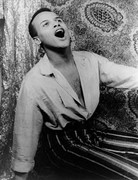
Singing is the act of producing musical sounds with the voice, and augments regular speech by the use of tonality, rhythm, the use of sustained tones and a variety of vocal techniques. A person who sings is called a singer or vocalist. Singers perform music (arias, recitatives, songs, etc.) that can be sung without accompaniment or with accompaniment by musical instruments. Singing is often done in a group of other musicians, such as in a choir of singers with different voice ranges, or in an ensemble with instrumentalists, such as a rock group or baroque ensemble. Singers may also perform as soloist with accompaniment from a piano (as in art song and in some jazz styles) or with a symphony orchestra or big band. There are a range of different singing styles, including art music styles such as opera and Chinese opera, religious music styles such as Gospel, traditional music styles, world music, jazz, blues and popular music styles such as pop and rock.
Singing can be formal or informal, arranged or improvised. It may be done for religious devotion, as a hobby, as a source of pleasure, comfort, or ritual, as part of music education, or as a profession. Excellence in singing requires time, dedication, instruction, and regular practice. If practice is done on a regular basis then the sounds can become more clear and strong.[1]Professional singers usually build their careers around one specific musical genre, such as classical or rock, although there are singers with crossover success (singing in more than one genre). They typically take voice training provided by voice teachers or vocal coaches throughout their careers.


Voices
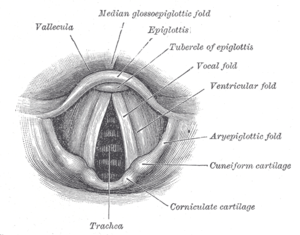
A labeled anatomical diagram of the vocal folds or cords
In its physical aspect, singing has a well-defined technique that depends on the use of the lungs, which act as an air supply, or bellows; on the larynx, which acts as a reed or vibrator; on the chest and head cavities, which have the function of an amplifier, as the tube in a wind instrument; and on the tongue, which together with the palate, teeth, and lips articulate and impose consonants and vowels on the amplified sound. Though these four mechanisms function independently, they are nevertheless coordinated in the establishment of a vocal technique and are made to interact upon one another.[2] During passive breathing, air is inhaled with the diaphragm while exhalation occurs without any effort. Exhalation may be aided by the abdominal, internal intercostal and lower pelvis/pelvic muscles. Inhalation is aided by use of external intercostal, scalene and sternocleidomastoid. The pitch is altered with the vocal cords. With the lips closed, this is called humming.
Vocal resonation.
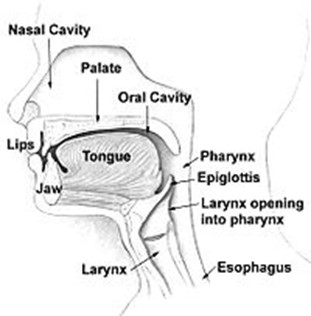
Vocal resonation is the process by which the basic product of phonation is enhanced in timbre and/or intensity by the air-filled cavities through which it passes on its way to the outside air. Various terms related to the resonation process include amplification, enrichment, enlargement, improvement, intensification, and prolongation, although in strictly scientific usage acoustic authorities would question most of them. The main point to be drawn from these terms by a singer or speaker is that the end result of resonation is, or should be, to make a better sound. There are seven areas that may be listed as possible vocal resonators. In sequence from the lowest within the body to the highest, these areas are the chest, the tracheal tree, the larynx itself, the pharynx, the oral cavity, the nasal cavity, and the sinuses.
How to Learn to Play an Instrument
Three Parts:
Choosing an InstrumentLearning FundamentalsMaking MusicCommunity.
Learning to play an instrument the right way can be one of the most satisfying and exciting ways to spend your free time. With the right dedication and training, you can learn to play any style of sound, any kind of instrument, and start speaking the language of music. Pick an instrument from the suggestions offered below, learn to play with the correct fundamentals, and start making music.
Part1
Choosing an Instrument
- EXPERIMENT WITH MANY INSTRUMENTS BEFORE COMMITTING TO ONE. Deciding to start learning to play an instrument can be as simple as picking one up at a store or a friend’s house and making a few notes. You might not be making music yet, but try to get your hands on an instrument and get a feel for it in your hands before committing to buy one or signing up for lessons.
- Typically, if you want to sign up for band or orchestra at your school, call-outs are regularly held during which the directors allow you to experiment with instruments and select one. Go to one of these call-outs and check out all the different kinds of instruments.
- Most instrument stores are excited to share their instruments with you and let you give them a shot. They might even be able to show you a few things.
2 TRY OUT THE CLASSIC PIANO. One of the most common instruments to start out on, used in many different styles and regions, is the piano. From children to adults, the piano is an extraordinarily popular instrument to play and learn. Because you can actually see the notes in front of you, the piano is also a good instrument to build your knowledge of how music works, and your music-reading. Once you’ve learned the piano, you can also specialize in:
- Organ
- Accordion
- Synthesizer
- Harpsichord
- Harmonium.
3THINK ABOUT ROCKING OUT ON GUITAR. Other than the piano, the most popular instrument from Hank to Hendrix is the guitar. Technically a classical stringed instrument, the popular electric guitar put the instrument into pop culture like no other instrument. It’s fun for rock and roll, jazz, and almost any kind of music. Guitar also provides a good foundation for different kinds of folk or rock instruments:
- Bass guitar
- Mandolin
- Banjo
- Harp
- Dulcimer.
4 CONSIDER ORCHESTRAL STRINGED INSTRUMENTS. If you want to play in an orchestra, a string quartet, or have a particular interest in classical music, a stringed instrument might be right for you.[1] These instruments are also commonly used for folk music and other acoustic sounds. You might consider the following instruments:
- Violin
- Viola
- Cello
- Double bass (also known as the upright bass).
5 TRY YOUR HAND AT THE BRASS FAMILY. Brass instruments are so-called because they are traditionally extremely long metal tubes, bent in intricate patterns, featuring valves or keys to change the pitch, and made entirely of brass. Now they’re generally made of different metals, but still work by vibrating your lips inside a metal mouthpiece. They’re used in concert bands, jazz, marching bands, and many other types of music. Brass instruments include:
- Trumpet
- Trombone
- Tuba
- French horn
- Baritone
- Sousaphone.
6 CHECK OUT THE WOODWINDS. Like brass instruments, woodwinds are played with the power of the breath. While brass instruments use mouthpieces to blow through and vibrate your lips, however, woodwinds use reeds that vibrate themselves when you blow over them. They’re made of many different combinations of metals, woods, and reeds, and no orchestra or jazz combo is complete without them. Woodwind instruments include:
- Flute, piccolo, or fife
- Saxophone
- Clarinet
- Oboe
- Bassoon
- Harmonica.
7 BANG ON SOME PERCUSSION. Holding down the bottom-end of most music groups are the percussionists. In rock bands and jazz combos, the drummer typically plays a drum kit, made of several drums organized at once to play simultaneously with sticks and pedals. In orchestras and concert bands, percussionists perform a quite large variety of instruments that are played by striking them with hands, mallets, or sticks. Percussion instruments include:
- The drum set
- vibraphone, Marimba, and xylophone
- Glockenspiel
- bells and Cymbals
- Congas and bongos
- Tympani
- Woodblocks, cowbells, and triangles.
8
CONSIDER OTHER VARIETIES OF INSTRUMENT. There are literally thousands of instruments you could take up and hundreds of teachers who offer lessons. Explore the world of music and listen for things you like and you might enjoy playing. Some difficult-to-categorize instruments: - Harmonica
- Djembe
- Concertina
- Bagpipes
- Singing bowls
- Ukulele
- Mbira
- Sitar.
Part2
Learning Fundamental
1 GET THE CORRECT SIZE OF INSTRUMENT. You want to make sure you end up with both an instrument that works for your size and your hands, as well as an appropriate size of that instrument for you. Long and slender fingers are desirable for string instruments, while some brass instruments are somewhat heavy and require the strength and lung-capacity necessary to play them.
- Some instruments, like violin and guitar, are available in lots of different sizes that can be customizable for your abilities and your size. Child-sizes are common. Look into your options, and get something in your budget that feels comfortable. Talk to the employees at the instrument store to get a sense of appropriate sizes and models.
- Some band directors try to steer people away from particular instruments like trumpet or saxophone because they’re very popular. Pursue the instrument you want to play. There are one-handed guitarists and petite tuba players.
2 LEARN TO HOLD AND TUNE YOUR INSTRUMENT PROPERLY. You can very quickly develop bad habits by playing your instrument without the right posture, or by playing it out of tune. You need to develop the proper technique with your particular instrument, holding it, sitting right, and blowing or striking the strings in the correct position.
- Have your band director, teacher, or music store employee to give you a tutorial on the proper technique for your instrument. If you don’t have access to teachers, videos and diagrams online are excellent resources for technique.
- Spend time tuning every time you sit down to play. Even unexpected instruments like the trombone need tuned, or you’ll develop the wrong positioning on the slide when you’re trying to hit the notes.
3 LEARN TO READ MUSIC NOTATION. Though it can be a bit like learning a new language, learning how to read music will expand your musical horizons considerably. You can learn any song just by looking at the sheet music, noting the melody, the rhythm, and even the feeling of the music in the page directions. It’s an invaluable tool for students of any instrument.
- Make sure you learn to read bass clef if you’re learning bass guitar or low brass instruments like trombone, baritone, and tuba.
- Learn and practice playing scales. On all instruments, playing scales will help you improve faster technically and help you become more familiar with the correct notes, building your muscle memory toward them.
- As you progress, consider learning a little theory. Knowledge of simple chords and scales will broaden your musical imagination, you can do a great deal with a just a little. Ask a friend to show you, or find an online resource. Learn these basic structures at a comfortable pace, and you’ll soon be tackling more advanced ideas.
4 PRACTICE CONSTANTLY. The difference between learning an instrument and giving it up is practice. Develop a practice routine and commit to it. Practice at least 30 minutes a day, every day, to develop the right consistent habits and learn to play the instrument like it deserves to be played.
- Consider taking private lessons. Instructional books and YouTube videos can only take you so far, especially with instruments like the violin or wind instruments. Suzuki method classes spend a great deal of time (sometimes years) playing on fake violin-shaped instruments to get the correct bowing technique. Having one-on-one attention is invaluable when you’re trying to learn an instrument.
- Make it easy to practice. Find a nice place in the house for your instrument. Store it where you spend your leisure time, or someplace where you’re going to see it often during your day. The more accessible your instrument, the more you will pick it up and play it. Eventually you’ll be picking it up every free minute you have.
5 GET RHYTHM. It’s very important to always practice playing in time. One of the signs of a novice player is that they often will play the notes as quickly as they are able, rather than playing them appropriately. When you learn the difference between playing in 4/4 time and waltz, when you learn the difference between quarter notes and whole notes, these things will be more clear, but it’s critical to play according to the rhythm of the song that you’re learning to play. Even if you’re practicing scales, play in time.
- Find a beat off of which to work: there are free metronomes online. A ticking clock or the radio will function well for you too.
6 TAKE CARE OF YOUR INSTRUMENT. It’s no fun to play a trombone with a sticky slide, a sax with old reeds, or a guitar with gnarly green strings. Learn how to take care of your instrument, taking the time to clean, maintain, and respect it for the piece of art that it is. You won’t develop bad habits in your technique and you’ll get more life out of your instrument, not to mention a cleaner and more true sound. Take a few minutes before and after every practice session to take care of your instrument and do it right.