WEEK SEVEN
CADENCES
The cadence is a progression of two chords that are arranged to give a logical end to a musical phrase or musical sentence. In language, punctuations such as commas and full stop are used to make phrases and sentences meaningful as we read a passage.
In similar way, cadences are used at the end of musical phrases and sentences.
Types of Cadence
There are four types of Cadence namely;
- Perfect Cadence
- Imperfect Cadence
- Plagal Cadence
- Interrupted Cadence
A Perfect Cadence progression from dominant which is (5th) to tonic (1st) this progression is also called the full close because it has a feeling of finality or conclusion. i.e soh, doh
Imperfect Cadence is a progression of any chord to dominant (5th) and this progression is also called half close e.g (a) doh – soh. (b) reh – soh.
Plagal cadence is
the progression from sub-dominant which is (4th) to Tonic. This progression also serve as another kind full stop known as “Amen chord” because of it frequent used.
e.g fah- me.
Interrupted cadence it is the only cadence that require secondary triad or secondary chord, its progression is from dominant (5th) chord to (6th). It is also known as surprise cadence because it creates an element of surprise.
WEEK EIGHT
INVERSION OF TRIADS
When any other note of a chord its root placed in the bass (or lowest) part, that chord or triad is said to be “inverted”.
It will be obvious that number of inversions any chord may have will be always one less than the number of notes in the chord.
A triad having three notes will therefore have two inversions, called respectively its first and second inversions.
Examples
First inversion of triads
When the 3rd of a chord or triad is in the bass, that triad is in its inversion
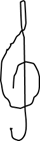
a b
 | |
 |  |
 |  |


5th root
3rd 5th
Root 3rd
Second inversion
When the 5th of a chord is in the bass, and the 3rd is being placed above it that triad or chord is said to be in second inversion
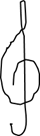 a c
a c
 | |
 | |
 |  |
 |


5th 3rd
3rd root
Root 5th
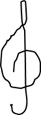 Root position 1st inversion 2nd inversion
 | ||
 |  | |
 |  |  |
 |  |


5th root 3rd
3rd 5th root
Root 3rd 5th