WEEK SEVEN
MELODY WRITING
Melody is defined as a series of single notes that add up to a recognizable whole. We perceive the pitches of a melody in relation to each other in the same way we hear the words of a sentence not singly but as an entire thought.
It is often the element in music that makes the most direct appeal to the listener.
Characteristics of Melody
- A melody begins, moves and ends; it has direction, shape and continuity
- There are different kinds of melody : Vocal and instrumental
- Melody may moves conjunctly i.e in tone and semitones
- A melody’s range is the distance between the lowest and highest tones
- Note duration as well as pitches contribute to the distinctive character of a melody
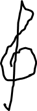
Class exercise: write a melody not less than four bars using the treble clef, indicate the key signature and time signature.


 |  |  | ||
  |    |    |  | |
  |   |  |     | |
  |   |


Assignment
Write a melody of 5 bars on G major using the treble clef and indicate your time signature
WEEK EIGHT
MUSICAL FORMS
Most musical pieces have been specifically designed and therefore fall into some sort of plan. Without a definite idea or design, music would have be chaotic.
Basically the composition are either in binary (AB) or ternary (ABA) form
- Binary form : This is the simplest musical form that is in two part AB
- Ternary form : (ABA form) this is a musical form in which the third section is more or less the same as the first
- Episodical form : An episode always implies a change of thought or theme or a continuous movement which contain single episode.
- Sonata form : An instrumental composition in three or four movement usually for one or two instrument. Sonata form make use of ternary idea in a grand style i.e (A) Exposition (B) Development (A) Recapitulation.
- Symphony : This is a musical work in three or four movement for the or chestra
Assignment
Write short note on the following
- Opera 2. Oratorio