CLASS; J S S 2 WEEK 3
TOPIC; DANCE AS A CAREER.
Dance is any body movement home or space for express human emotion in reaction to musical performance anywhere. It is an organized movement of the body to musical rhythm. It could be for fun to narrate a story, to inform or entertain.
Contemporary dance draws on both classical ballet and modern dance, whereas postmodern dance was a direct and opposite response to modern dance. Merce Cunningham is considered to be the first choreographer to “develop an independent attitude towards modern dance” and defy the ideas that were established by it.[4][5] In 1944 Cunningham accompanied his dance with music by John Cage, who observed that Cunningham’s dance “no longer relies on linear elements (…) nor does it rely on a movement towards and away from climax. As in abstract painting, it is assumed that an element (a movement, a sound, a change of light) is in and of itself expressive; what it communicates is in large part determined by the observer themselves.” Cunningham formed the Merce Cunningham Dance Company in 1953 and went on to create more than one hundred and fifty works for the company, many of which have been performed internationally by ballet and modern dance companies.
DANCER
Job Description
Dancers use movement, gesture and body language to portray a character, story, situation or abstract concept to an audience, usually to the accompaniment of music. This normally involves interpreting the work of a choreographer, although it may sometimes require improvisation.
Dancers work in a variety of genres including classical ballet, modern stage dance, contemporary dance, street dance and African or Asian dance. They may perform to a live audience or take part in a recorded performance for television, film or music video.
Many dancers follow portfolio careers, combining performance with teaching, choreography or administrative work in a dance company.
Work activities will differ from dancer to dancer, depending on the contract.
Self-promotion is also a significant feature of the work. This can include sending out your CV and/or photographs/footage, delivering presentations, running workshops or attending auditions and meetings.
Job Duties/Responsibilities
- discussing and interpreting choreography;
- learning and using other skills such as singing and acting – many roles, for example in musical theatre, require a combination of performance skills;
- working in dance development and promotion, encouraging and enabling people, especially children, to become involved in dance and to understand and appreciate it;
- running workshops in the community, for example with groups of disabled people;
- undertaking administrative, promotional or stage management work, particularly in a small company or if setting up your own company;
- Liaising with arts and dance organizations, theatres and other venues regarding funding and contracts.
- looking after costumes and equipment;
- preparing for and attending auditions and casting sessions;
- preparing for performances, by rehearsing and exercising;
- performing to live audiences and for television, film and music video productions;
- studying and creating choreography;
- taking care of the health and safety of others, which requires knowledge and observation of physiology and anatomy, as well as safe use of premises and equipment;
- teaching dance, either privately or in the public sector;
Choreographer
There is usually a choreographer who makes the creative decisions. He/she chooses whether the piece is an abstract or a narrative one. Dancers are selected based on their skill and training. The choreography is determined based on its relation to the music or sounds that is danced to. The role of music in contemporary dance is different from in other genres because it can serve as a backdrop to the piece. The choreographer has control over the costumes and their aesthetic value for the overall composition of the performance and also in regards to how they influence dancers’ movements.
Dance technique
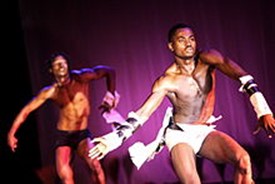
Le Sacre du Tempo
Dance techniques and movement philosophies employed in contemporary dance may include Contemporary ballet, Dance improvisation, Modern dance styles from United States such as Graham technique, Humphrey-Weidman technique and Horton technique, Modern dance of Europe Bartenieff Fundamentals and the dance technique of Isadora Duncan.
Contemporary dancers train using contemporary dance techniques as well as non-dance related practices such as Pilates, Yoga, the acting practice of Corporeal mime – Étienne Decroux technique and somatic practices such as Alexander technique,
Feldenkrais Method, Sullivan Technique and Franklin-Methode, American contemporary techniques such as José Limón technique and Hawkins technique and Postmodern dance techniques such as Contact improvisation and Cunningham technique, and Release technique.